
Prepare your car for autumn and winter
When should you switch to winter tyres?
There is no fixed date for changing to winter tyres in Denmark. However, since 1 July 2025, it has been illegal to drive with tyres that are considered ”clearly unsuitable” for the road conditions. If there is snow, ice, or slush on the roads, you may therefore not drive on summer tyres.
If the police assess that your vehicle’s tyres are unsuitable for the conditions, you may receive a fine of DKK 1,000 per tyre.
Many drivers choose to switch to winter tyres when temperatures approach 7°C, as winter tyres are designed to maintain grip in low temperatures. However, we recommend booking your tyre change appointment well in advance when autumn begins to arrive, as waiting times can often be long once the cold weather sets in.
Look for these markings
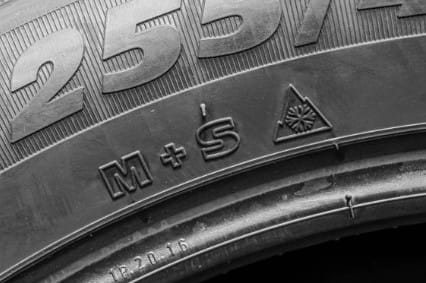
In winter conditions, tyres should as a minimum be marked M+S (Mud & Snow). In severe winter conditions, tyres with the 3PMSF (Three Peak Mountain Snowflake) marking are recommended. This also applies to all-season tyres.
You can read more about this at the Danish Road Safety Council.
What does your insurance say?
In some cases, the insurance company may determine that gross negligence has occurred if the tyres are not suitable for the conditions. In certain situations, this may result in a reduction of compensation under your comprehensive insurance policy. This may apply, for example:
If you drive on summer tyres in very icy or snowy conditions.
If the tyres are in poor condition (insufficient tread depth or damaged tyres).
If the accident could have been avoided with the correct tyre choice and appropriate driving behaviour.
Driving abroad during winter
If you are going on a skiing holiday or driving abroad during winter, it is important to be aware that regulations vary from country to country. Several European countries have specific requirements regarding winter tyres, tread depth, or carrying snow chains during the winter season. You should therefore always check the local regulations before crossing the border.
You can find an overview at FDM: See winter tyre regulations in Denmark and other countries.
5 Tips for safe winter driving
Even the best winter tyres cannot overcome the laws of physics. That is why your driving style is just as important as your vehicle’s equipment.
Reduce your speed
Wet, snowy, or icy roads result in longer braking distances and reduced grip. Always adjust your speed to the conditions.
Keep extra distance
The distance to the vehicle ahead should be greater than normal during winter. This gives you more time to react if traffic suddenly slows down.
Leave earlier
Stress and rushing are a poor combination on slippery roads. Allow extra travel time when weather conditions are challenging.
Ensure clear visibility
Always remove snow and ice from windows, mirrors, lights, the bonnet, and the roof before driving. This improves safety for both you and other road users and is required by law.
Check the weather before you leave
A quick look at the weather forecast can help you plan your journey and avoid the worst conditions. If authorities advise against driving, you should leave the car parked if possible.
Avoid the most common winter vehicle issues
Winter places greater strain on your vehicle than any other season. By taking a few precautions, you can reduce the risk of breakdowns and damage.
Take care of the battery
Cold temperatures increase the strain on your vehicle’s battery. If you experience slow starts or warning messages on the dashboard, it may indicate that the battery should be checked.
Monitor your tyres and tyre pressure
Cold weather affects tyre pressure. Incorrect tyre pressure can reduce safety, comfort, and energy efficiency. Check your tyre pressure regularly throughout the winter.
Top up windscreen washer fluid
Winter roads quickly lead to dirty windows. Make sure your vehicle always has frost-protected washer fluid.
Check your lights
Dark mornings and early evenings make vehicle lights more important than at any other time of the year. Regularly check that all lights are functioning correctly.
Prevent frozen doors and rubber seals
Cold weather and moisture can cause doors and seals to freeze shut. Applying a silicone stick to the rubber seals can help reduce the risk.
Useful equipment to keep in your car during winter
Winter weather can be unpredictable. That is why it is worth carrying some extra equipment in your vehicle.
We recommend:
Ice scraper for ice and snow
Gloves
A shovel if snowfall or drifting snow is expected
High-visibility vests for all passengers
A fully charged mobile phone
Roadside assistance contact number
A warm blanket
Snacks and water for longer journeys
Ready for winter challenges
Preparing your car for winter involves more than simply changing tyres. By checking your vehicle’s equipment, adapting your driving style, and being prepared for changing weather conditions, you can improve safety and reduce the risk of unpleasant surprises on the road.
Have a safe journey and always drive according to the conditions.
Sources: Rådet for Sikker Trafik and FDM.