
Self-Driving cars in Denmark: What does the new technology mean?
One of the latest milestones is the Danish Road Traffic Authority’s approval of Tesla’s FSD Supervised driver assistance system for use in Denmark. The approval has generated considerable interest among motorists, but it has also raised several questions regarding responsibility, safety and insurance cover.
From driver assistance systems to the cars of the future
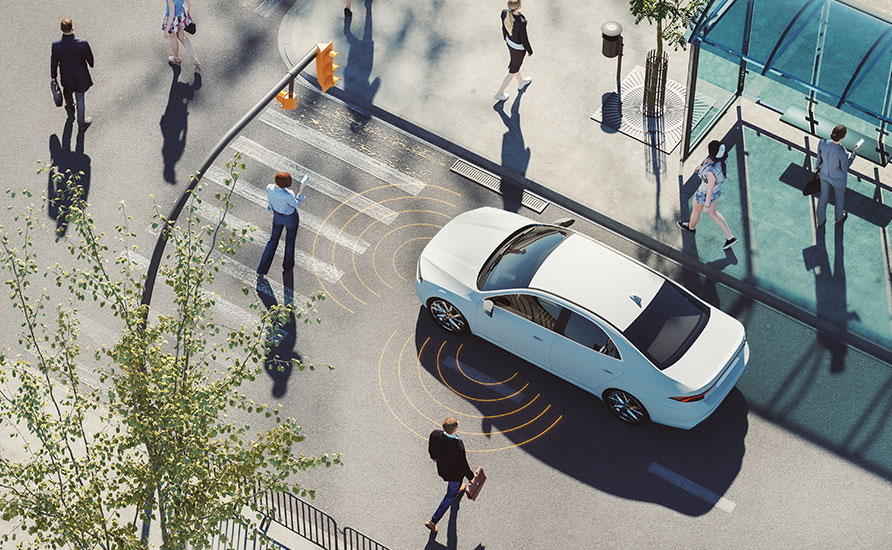
Although the term “self-driving cars” is often used in public debate, most systems currently available on the market are far from fully autonomous. Instead, they are advanced assistance systems designed to support the driver in a range of driving situations.
Tesla’s FSD Supervised is an example of this type of technology. The system can assist with acceleration, braking, steering and lane changes, among other functions, and has been developed to make driving more comfortable and less stressful in everyday situations.
The technology represents an exciting development that has been years in the making. At the same time, it is only natural that new features generate both enthusiasm and questions about how they work in practice and what responsibilities come with them.
How has the system been approved?
FSD Supervised was initially approved by the Dutch authority RDW. For such a system to be used in other EU countries, it requires either a common European approval or, as in this case, recognition of the Dutch approval by individual national authorities.
Denmark is among the countries that have chosen to recognise the approval. This means that Danish Tesla owners can legally use the system within the applicable terms and conditions governing its use.
In the longer term, the system may obtain EU-wide type approval if it is approved by the European Commission. Such approval would automatically apply across all Member States.
Who is responsible while driving?
Despite the name Full Self-Driving, it is important to emphasise that the system does not make the vehicle self-driving in either a legal or practical sense.
The driver remains fully responsible for the vehicle and must maintain constant awareness of surrounding traffic. Drivers are required to be ready to take control at short notice whenever the situation demands it.
The assistance system is exactly that – an assistant. It can help with driving, but it cannot replace the driver’s judgement or responsibility. For example, if the system misinterprets a traffic signal or a road situation, it remains the driver’s responsibility to respond appropriately.
How does insurance cover apply?
As a general rule, the correct use of an authority-approved driver assistance system does not alter the standard principles of motor insurance cover.
If damage occurs while the system is in use, the incident will generally be covered by the vehicle’s comprehensive motor insurance (fully comprehensive cover) in the same way as during ordinary driving. Comprehensive insurance will typically cover the damage, although—just as when driving without assistance systems—cover depends on a specific assessment of the circumstances surrounding the incident.
Since responsibility remains with the driver, motorists are expected to exercise the same level of attention and care as they would when driving without driver assistance systems. The technology may be a valuable aid, but it does not relieve the driver of responsibility behind the wheel.
What if the assistance system makes a mistake?
Even if a driver assistance system misjudges a situation, the starting point remains that the driver is responsible for the driving task.
From an insurance perspective, any resulting damage will generally be handled in the same way as any other road traffic claim. Comprehensive insurance will normally cover the damage, but liability will still be assessed based on the driver’s actions and the specific circumstances of the incident, including any actions taken—or not taken—by the driver.
Can the manufacturer be held liable?
In certain circumstances, questions of product liability may arise if it can be demonstrated that a defect in the system itself caused the damage. However, this does not change the fundamental position that, in relation to both the authorities and insurers, the driver is generally responsible for the operation of the vehicle.
For individual motorists, this means that they cannot simply sit back and transfer responsibility to the technology—even if the system makes an error.
In short, a driver assistance system may help with driving, but it must not replace the driver’s attention. If the system fails, it will generally still be expected that the driver should have recognised the issue and intervened in time.
The technology is evolving – the responsibility remains
The approval of advanced driver assistance systems such as FSD Supervised marks an important step towards more automated vehicles. The technology can contribute to a more comfortable driving experience and has the potential to improve road safety, but it does not change the fundamental responsibility that comes with being behind the wheel. Drivers must continue to pay attention to traffic, drive responsibly and be ready to intervene whenever the situation requires it.
As the technology continues to evolve, legislation, liability and insurance considerations will remain key areas of focus. Until fully autonomous vehicles become a reality, advanced driver assistance systems should be viewed for what they are today: a helping hand that can support driving, but not replace the responsible motorist.
________________________________________
DISCLAIMER: THE INFORMATION ABOVE IS OF A GENERAL NATURE AND CANNOT REPLACE AN ASSESSMENT OF A SPECIFIC SITUATION. VEHICLE USERS ARE SOLELY RESPONSIBLE FOR COMPLYING WITH APPLICABLE LAWS AND REGULATIONS AND FOR KEEPING THEMSELVES INFORMED ABOUT THE RULES AND REQUIREMENTS GOVERNING THE USE OF DRIVER ASSISTANCE SYSTEMS AND THE VEHICLE IN GENERAL.